
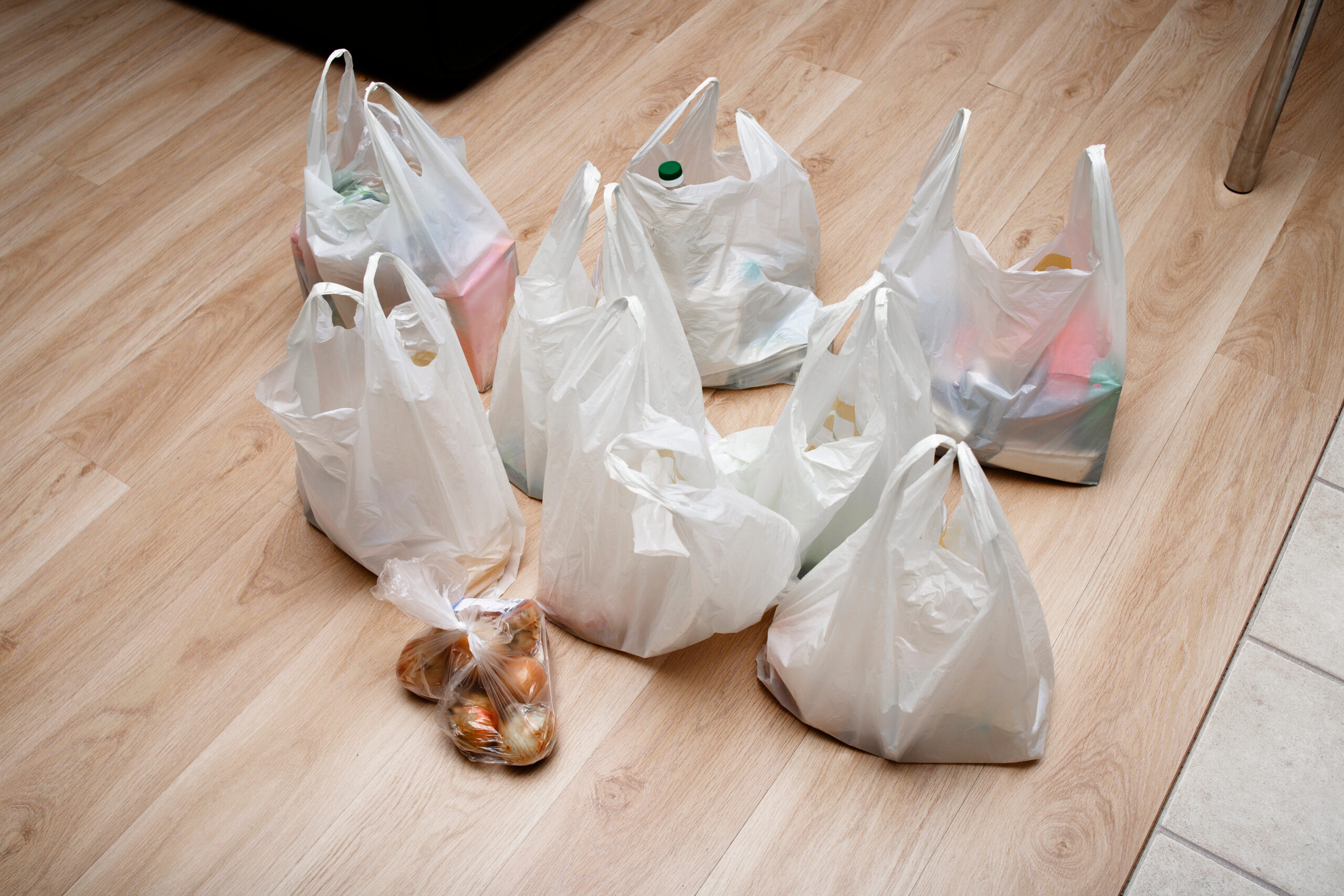
If you’re anything like me, your kitchen or pantry has quietly become a storage facility for grocery bags—especially after a few grocery deliveries or curbside pickups. You start with good intentions, then suddenly there’s a puffed-out collection of plastic and a stack of crinkly paper bags staring at you from the corner.
In a perfect world, we’d always use our own reusable bags—but drive-up and delivery don’t leave us with that option. So instead of feeling guilty, let’s get creative. These bags already exist—we might as well make the most of them.

Reusing Plastic Grocery Bags (Without Shame)
Lightweight and stretchy, plastic bags can be surprisingly useful around the house and garden when repurposed with intention.
1. Line your small trash bins
The classic, and for good reason. Use them to line bathroom, bedroom, or laundry room waste bins.
2. Scoop + toss pet waste
Keep a stash by the litter box or near your dog leash. They’re perfect for daily cleanups.
3. Protect your hands during messy tasks
Pull a bag over each hand when handling greasy pans, expired fridge food, or outdoor clean-up. Instant makeshift gloves.
4. Stuff them into boots or shoes
Helps hold shape in seasonal footwear or protect from dust in the off-season. Also works as a quick rain barrier if you forgot your waterproof shoes.
5. Use as plant pot liners
Before placing a potted plant into a decorative (non-draining) outer pot, line the bottom with a plastic bag to catch any excess water and protect the vessel.
🧺 Bonus: Store plastic bags inside one large bag or empty tissue box to keep them tidy and accessible.

Reusing Paper Grocery Bags (They’re Stronger Than They Look)
Paper bags are thick, sturdy, and surprisingly versatile—great for both organizing and creating.
1. Compost them
Tear into pieces and layer with food scraps. Brown paper adds carbon to balance your compost pile. Avoid bags with plastic liners or heavy ink.
2. Rip for fire starter
Crumple into loose balls or twist into braids for kindling in wood stoves, fire pits, or campfires.
3. Wrap gifts or packages
Cut and flip inside-out for a simple, rustic gift wrap. Let kids decorate the outside with crayons or stamps.
4. Use as a meal prep mat
Lay a paper bag flat as a cutting or peeling surface when working with messy foods—especially corn husks, fish skin, or herb stems. Then toss the whole mess into compost or the fire bin.
5. Make seed-starting pots
Roll into small cups or origami-style fold-and-tuck shapes. Fill with soil and seeds, then plant straight into the garden when ready.
🌿 Tip: Keep a few flattened in your car to protect seats from muddy boots or wet plants after nursery trips.
Mindful Reuse Tips for Both
- Designate a bag drawer or bin so things don’t overflow or get forgotten. Out of sight often means out of use.
- Set limits. Decide how many of each type you truly need and recycle or pass on the rest (some local food pantries or thrift stores accept clean bags).
- Rotate and reuse before they tear—especially plastic bags. They usually have a longer life than we give them credit for.
Gentle Shifts, Big Impact
Reducing waste doesn’t always look like perfection—it often looks like practicality. It looks like choosing to reuse what we have, a few more times, in ways that make daily life smoother and less wasteful.
Whether it’s a bag lined bin, a hand-wrapped gift, or a composted pile that turns into garden gold—these little acts matter. Not just for the earth, but for us. They remind us that we’re capable of adapting with care.
—
Jennifer at Sage + Seed